Return to Articles
9.01.2025
What is Play? Learning!
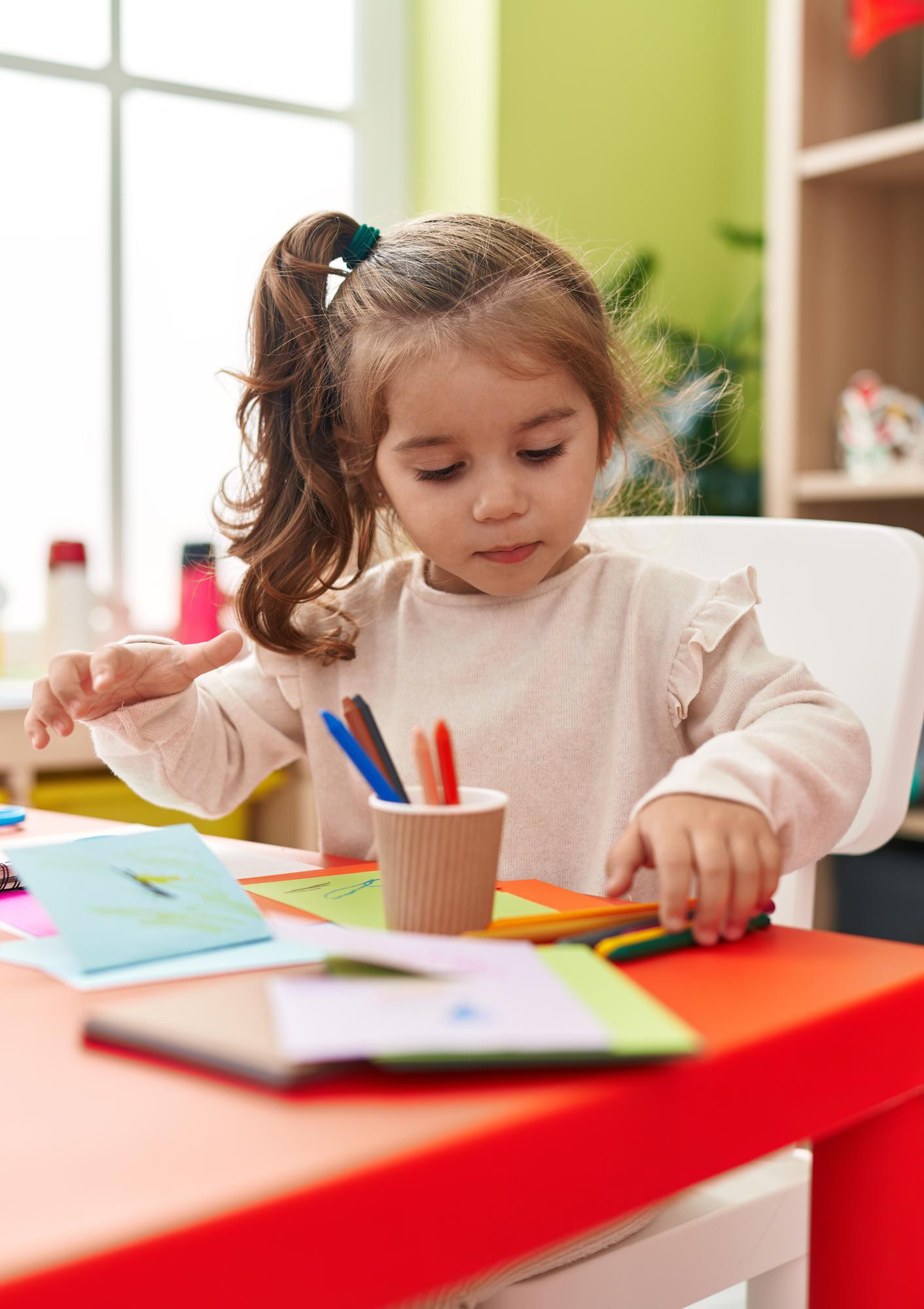
What Is Play?
By: Yaebin Kim, University of Nevada Reno, Extension
“Play is the work of the child.” By Maria Montessori
According to Montessori (Italian educator best known for the Montessori Method, a method of educating young children that stresses development of a child’s own natural abilities through practical play), there are a few essential characteristics of play:
- voluntary and enjoyable
- purposeful and spontaneous
- creativity expanded using problem solving skills, social skills, language skills and physical skills
- helping expand on new ideas
- helping the child to adapt socially
- helping to solve emotional problems
Absence of Play
Over the past several years, children’s opportunities to play have declined sharply (Gray, 2011). Why?
The increases in structured play activities and emergence of technology-based play have devalued the nature and meaning of play (Lester & Russel, 2008). Children may be losing the ability to play because they have too many highly structured toys and games.
Children these days spend a lot of time watching television, using smartphones or playing with other tech toys, but children need to spend more time dressing up, making dens, singing, dancing and playing outside.
The Importance of Play
Play and brain development
A number of research studies (Ginsburg, 2007; Rushton, Juola-Rushton, & Larkin, 2010) suggest that learning through play is not only child-friendly, but brain-friendly.
The play activities engaged in by children both stimulate and influence the patterns of connections made between the nerve cells.
This process influences the development of fine motor skills, language, socialization, personal awareness, emotional well-being, creativity, problem solving and learning ability.
Play and school readiness
According to the American Academy of Pediatrics, “Play is essential to development because it contributes to the cognitive, physical, social and emotional well-being of children and youth,” (Ginsburg et al., 2007, p.182).
The National Association for the Education of Young Children (NAEYC) recommends that schools provide play experiences for all preschool and primary-aged children (Bredekamp & Copple, 1997) because play is essential to healthy development and school readiness (language development, literacy, mathematics, science, creative arts, social and emotional development, approaches to learning and physical health and development).
Elkind even reassured parents that imaginative play especially helps a child prepare for academic and social success (Elkind, 2007).
What Adults Can Do
- Provide opportunities to play, appropriate play materials, time to themselves and spaces for play.
- Intentionally shape children’s play by providing play materials (paper, crayons, blocks, markers) and offering messy activities (finger painting, clay, etc.).
- Respond appropriately to each play situation (offering choices, giving objects, helping) and the need of individual children such as cooperation, responsive interactions and responsive comments (imitations/expansions of child’s speech, descriptions of an object or activity, questions about an object or activity).
- Watch for opportunities to help the child think. Ask open-ended questions (Why do you think that happened? What could happen next?), rather than yes or no questions, to expand children’s thinking processes during play.
- Observe how children play. Observation of play provides valuable information about a child’s interests, how they play, how long they play, and with whom they like to play.
- Do not intrude upon, frustrate or end the child’s play, but rather support and extend the play. The timing of adults’ interactions with children during their free play is crucial.
- Substitute play opportunities for passive activities (such as television viewing) and provide simple but open-ended play materials that stimulate investigation and learning (Frost, Wortham, & Feifel, 2005).
These could include blocks, paint, dress-up clothes, sensory toys, boxes of different shapes and sizes, tools, play dough, or safe natural materials (autumn leaves, flowers, twigs).
- Buy fewer toys for children. Adults buy a lot of toys to fill children’s time or minds, to cover their guilt for not spending enough time with their children, or to help children’s development.
However, when children have too many toys, or toys of the wrong types, they get overwhelmed and overstimulated, and are easily distracted. Therefore, they do not learn or play well (Sylva, Melhuish, Sammons, Siraj-Blatchford, & Taggart, 2010).
Editor Note: You can find ideas for fun activities for children that encourage play and support brain development in these First 5 Nevada “Activity Corner” articles:
- Brain Boosting with Building Play
- The Great Picnic Pack-Off
- Fun with Sock Sorting!
- Dig In and Grow! A Fun Family Gardening Adventure
- Busy Bug Hotel
- Splish Splash Water Wonders
You can also check out Vroom! which has over 1,000 tips to use everyday activities to enhance your child’s learning.
References
- Bredekamp, S., & Copple, C. (Eds.) (1997). Developmentally appropriate practice in early childhood programs. Washington, DC: National Association for the Education of Young Children.
- Elkind, D. (2007). The power of play: Learning what comes naturally. Cambridge, MA: Da Capo Press.
- Frost, K. L., Wortham, S. C., & Feifel, S. (2011). Play and child development (4th ed.). Upper Saddle River, NJ: Prentice Hall.
- Ginsburg, K., the Committee on Communications, & the Committee on Psychosocial Aspects of Child and Family Health. (2007). The importance of play in promoting healthy child development and maintaining strong parent-child bonds. American Academy of Pediatrics, 119(1), 182-191.
- Gray, P. (2011). The decline of play and the rise of psychopathology in children and adolescents. American Journal of Play, 3(4), 443-463.
- Lester, S., & Russel, W. (2008). Play for a change: Play, policy and practice-A review of contemporary perspectives. London: National Children’s Bureau.
- Rushton, S., Juola-Rushton, A., & Larkin, E. (2010). Neuroscience, play and early childhood education: Connections, implications and assessment. Early Childhood Education Journal, 27(5), 351-361.
- Shonkoff, J. P., & Phillips, D. A. (2000). From neurons to neighborhoods: The science of early childhood development. Washington, DC: National Academy Press.
- Sylva, K., Melhuish, E., Sammons, P., Siraj-Blatchford, I., & Taggart, B. (2010). Early childhood matters: Evidence from the effective preschool and primary education project. London: Routeledge.
Kim, Y. 2014, Play is Children's Learning, Extension | University of Nevada, Reno, FS-14-09
Source Link: https://extension.unr.edu/publication.aspx?PubID=2597
Click here to learn more about the Extension and the Healthy Kids Resource Center.