Return to Articles
6.01.2025
Activity Corner - Little Minds, Big Fun: Splish Splash Water Wonders
By: Dana Preece, Birth-3rd Grade Specialist, Preschool Development Grant B-5, Office of Early Learning and Development, Nevada Department of Education
As the weather gets warmer, many families enjoy playing in the water to cool off. Whether it’s at the pool, beach, or even a backyard splash pad, water play can be fun—but it’s also important to keep your child safe.
Here are some simple ways to keep children safe around water:
- Always watch your child closely. Stay close to your child when they’re in or near water.
- Use life jackets. Make sure your child wears a U.S. Coast Guard-approved life jacket, especially near lakes or rivers.
- Sign up for swimming lessons. Even babies and toddlers can start learning basic water skills with a parent.
- Fence your pool. Pools should be surrounded by a fence at least 4 feet tall with a self-closing, self-latching gate.
Teaching young children to respect water and always watching them when they play can help prevent accidents.
One fun way to teach your child about water is to determine what sinks and what floats? In a pool can your child sink and float?
Focus: STEAM (Science, Technology, Engineering, Art, Math)
- Science:
- Conduct simple investigations – gather information and notice similarities/differences.
- Technology:
- Use technology to explore water safety.
- Engineering:
- Plan/build a boat and see if it will float.
- Art:
- Materials to be creative with the boat build.
- Math:
- Sort objects into “sink” or “float” groups.
- Count how many objects floated and how many sank.
Materials Needed:
- Items from around the house (need to be able to be placed in water)
- Bathtub, pool, or bucket of water
- Phone/Tablet/Smart TV
- Art Supplies (Optional)
- Boat Building Materials (Optional)
6 month - 24 Month Olds
- Watch a water safety song together. Try one of these kid friendly videos on YouTube:
Paw Patrol Sing Along! – Olympian Michael Phelps Water Safety Song
Water Safety Song – Hello Cocobi
- Gather materials. Go around the house and select items to test its “float power.” Choose safe, non-breakable, waterproof items.
“Do you think this will float?”
- Explore items. Show your child each item. Say the name of each item. Allow your child to feel and explore the item.
“This is a ball. It is a red ball. It is smooth.”
- Let your child drop the item into the water. Then describe to your child what happened.
“Look, the ball is on top of the water. It is floating.”
- Repeat this process for all the items you want to test.
- Practice floating. When in a pool or bathtub, work with your child to practice floating.
“You are floating just like the ball was.”
2 -5-year-olds
- Watch and dance to a water safety song on YouTube, try one of these:
Paw Patrol Sing Along! – Olympian Michael Phelps Water Safety Song
Water Safety Song – Hello Cocobi
- Gather materials. Go around the house and select items to test its “float power”. Choose safe, non-breakable, waterproof items.
“Can that book get wet?”
“What happens when books get wet?”
- Make Predictions: Make a guess on if each item will sink or float. Then group them into two piles before testing your prediction. Take a picture for later.
“Do you think this dinosaur will sink or float?”
“Why do you think this car will sink?”
- Test your predictions: Drop one item into the water at a time. Watch to see if the item sinks or remains on the surface. Sometimes items may take a minute or two to start sinking.
“What happened when we dropped it in the water?”
“Why do you think that sank/floated?”
- Repeat this process for all the items you want to test.
- After all the items have been tested, sort them again, but this time by if they sank or floated. Look at the prediction picture you took on your phone. Discuss which items didn’t do what you predicted.
“Did everything do what you thought it would do?”
“Were there any surprises?”
Water play is a powerful way for young children to explore the world around them. By adding simple safety tips and creative learning activities, you can turn a splashy afternoon into a fun and meaningful learning experience for the whole family.
Learn more about keeping your child safe around water:
Extension: Build a boat
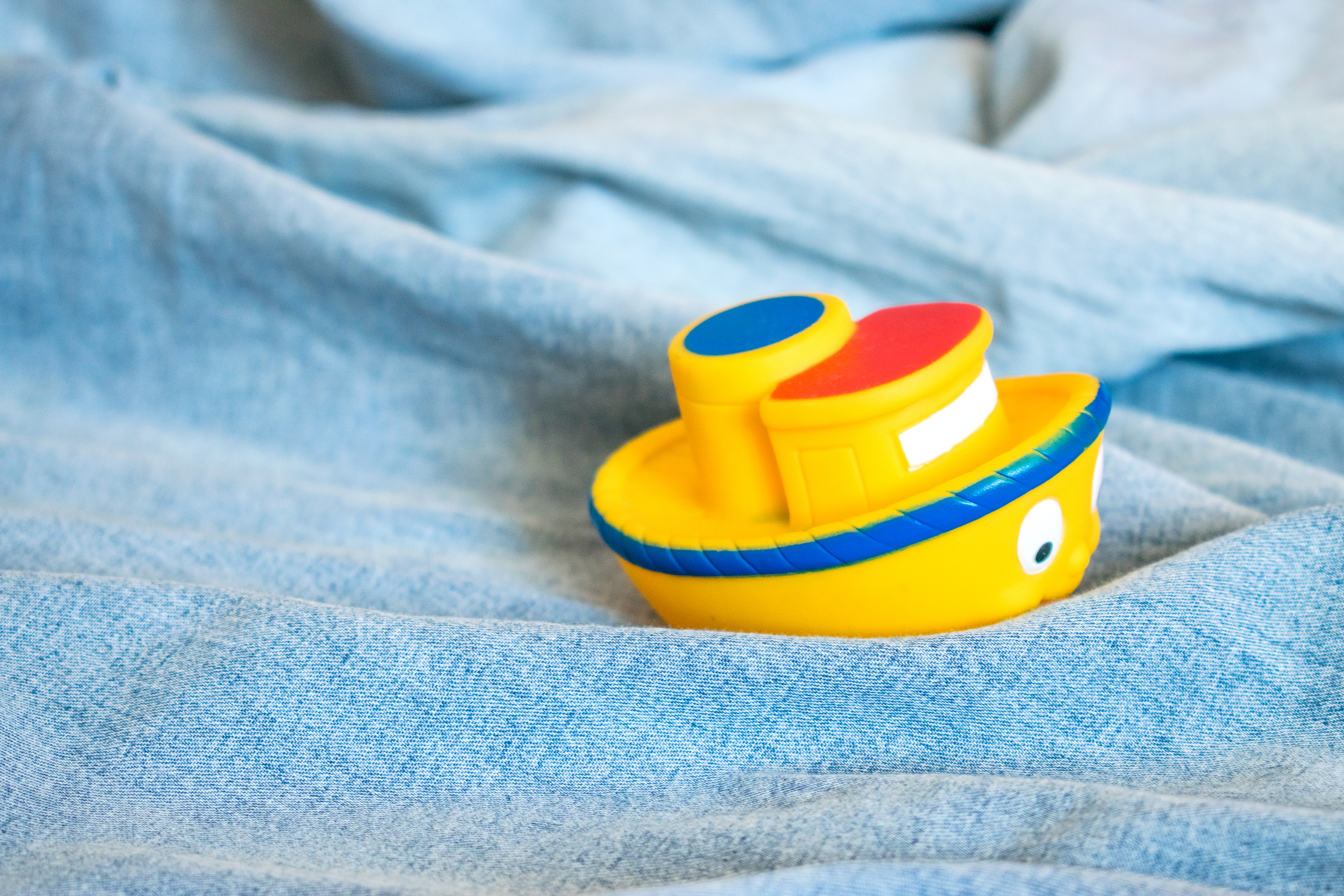
Now that you have a better understanding of what makes things sink or float, make a boat and see if you can keep it afloat. Gather materials from around the house. A toilet paper roll, paper, or a milk carton? Use your imagination and build your own toy boat. Don’t forget to decorate the boat!
Once the boat is ready, test your boat to see if it floats. If it doesn’t float right away, make some changes to the boat, and test it again.
Before testing:
“What did you make your boat out of?”
“What do you think will happen when we place the boat in the water?”
While testing:
“What do you notice about your boat?”
“Is water inside your boat? Why do you think water is coming in?”
After testing:
“How would you change your boat to help it float better?”
“What do you think worked well on your boat?”
First 5 Nevada Resources to Support Brain Development
- Vroom! offers resources for families and providers to help turn everyday activities into opportunities to improve brain development.
- Developmental Milestones are skills and behaviors that babies and young children experience at certain stages as they grow. Review the milestones by age, download the Developmental Milestones checklist, or the CDC’s Milestone Tracker App.
- Learn More: Read the First 5 Nevada article “Early Childhood Brain Development” to learn about the 5 Keys to Understanding and Supporting Brain Development or “The Science of Early Childhood Development” from the Harvard Center on the Developing Child.