Return to Articles
11.02.2026
Five Lessons I've Learned: Aerial Adaptive Movement for Neurodivergent Youth!
Author: Vanessa O. Dallas, Founder & Board President, Kindred Flight
Postpartum was quite a journey for me. I retired from the Air Force after 20 years and became a full-time stay-at-home mom. After two decades in a career that I felt like an expert in, I was suddenly a beginner again, but this time with a tiny human depending on me.
I immersed myself in learning everything that I could about child development. I was determined to be the best mom I could be. But part of that journey was realizing I also needed to make room for myself.
When my son was about 14 months old, I returned to aerial fitness (think Cirque du Soleil training, but for absolute beginners who can barely do a pull-up). It was a hobby that I loved before becoming a mother, and returning to it helped me find me again.
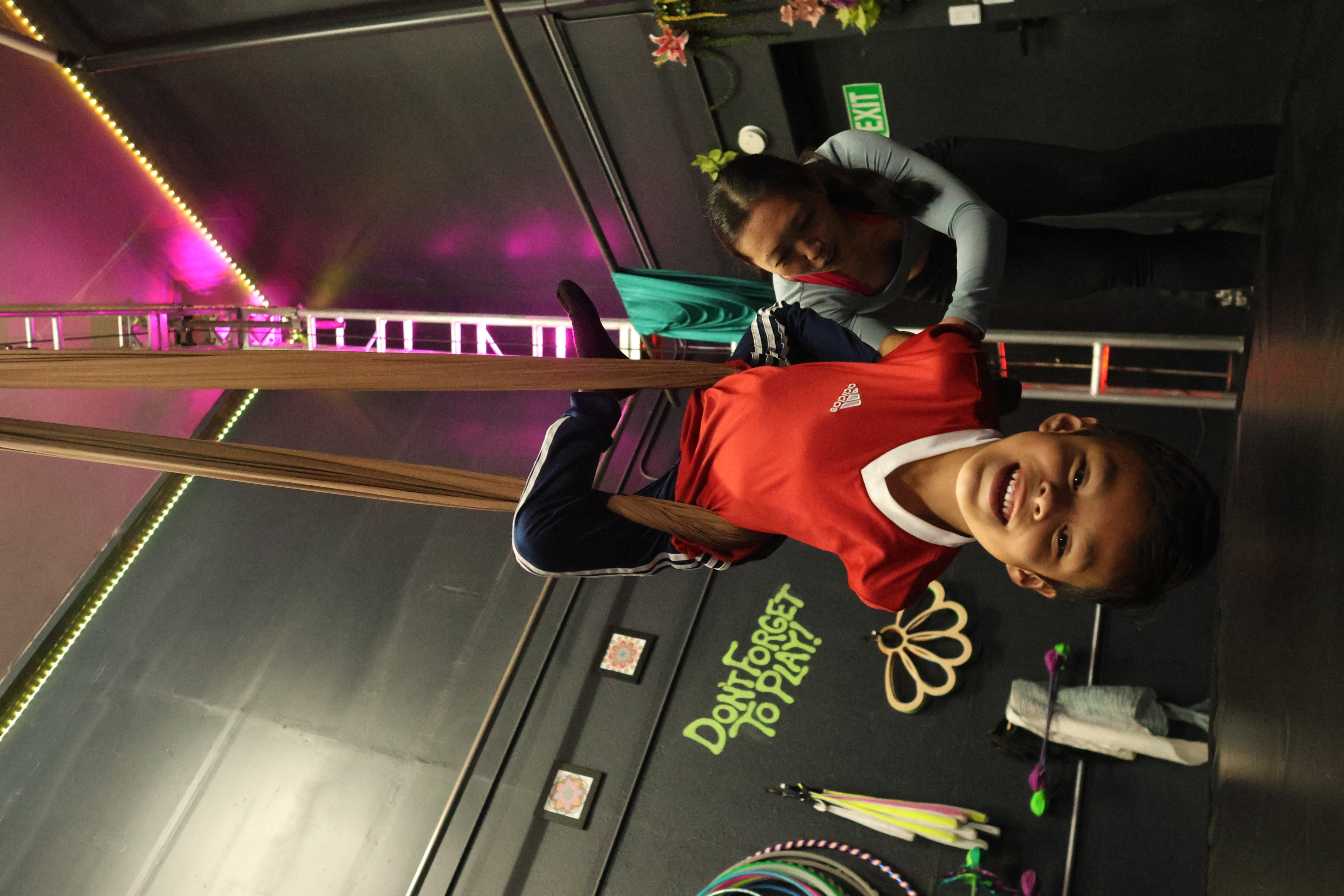
With everything I had been learning about child development, I returned to aerial with a new appreciation for how movement and learning new skills support both the brain and body. That perspective led me to create Kindred Flight, a nonprofit offering free, one-on-one adaptive aerial movement for neurodivergent youth. Children explore movement on hanging fabric or hoops, with activities adapted to their needs and pace.
Along the way, I’ve learned 5 lessons about supporting children that reach far beyond our aerial program.
1. Children need opportunities to move and try new things.
Movement is part of how young children learn. When they climb, balance, reach, dance, or try a new movement, they build skills that support both their brain and body. They practice solving problems and build body awareness.
A new movement gives a child something to work out. Where does my foot go? How far can I reach? What happens if I shift my weight?
Repeating a movement gives children chances to practice. Trying something new adds a different challenge. What looks like simple play can involve attention, effort, and discovery.
2. Children learn in different ways.
Some children jump into a new activity. Others watch from the sidelines before giving it a try. A child who needs time to warm up to the idea is still learning, even when they are not ready to join.
Children learn through play, watching others, repetition, and trying things for themselves. Their age, interests, and temperament can shape how they respond. What helps one child may not help another, and what works today may need to be changed tomorrow.
The way an activity is presented can make a difference. A demonstration, a playful game, or smaller steps can give children different ways to understand the same idea.
Learning does not always look like following directions or joining right away. Recognizing its many forms helps us notice learning that we might otherwise miss.
3. Progress doesn’t follow a straight line.
A child proudly tries something new one week, then wants nothing to do with it the next. It can leave adults wondering, “But you did it before. What changed?”
Being able to do something and feeling ready to do it are two different things. A skill may still be new and take a lot of effort. A different setting, a busy day, or frustration can make it harder to use.
Children also build skills at different rates. The child who eagerly climbs to the top of the playground may still need help joining a game. The child who tells detailed stories may find getting dressed a challenge. Their strengths and the areas where they need support exist side by side.
A child asking for help instead of walking away, saying “I need a break,” or trying again after frustration is showing growth, too. Those moments matter, even when the original task remains unfinished.
4. Support needs to last beyond the program.
A class or program may end, but a child’s need for support continues. What happens after the last session? How can families keep building on what their child has learned? What support is available to families who cannot attend?
Children keep facing new experiences, and the adults in their lives keep facing new questions. A program can be one part of that support, but it cannot be the whole picture.
For us, those questions grew out of our seven-week aerial program. They led us to find new ways to share knowledge with parents, caregivers, and professionals, including families we may never meet in person.
5. Supporting the adult supports the child.
How can we reach more children and make a positive difference in their lives? By equipping the people who support them every day.
Each new idea, skill, or piece of knowledge adds to an adult’s toolbox. Understanding different ways to communicate, build connection, and support children through big feelings gives parents, caregivers, and professionals more tools to draw from.
That impact can multiply. A parent can use what they learn with their children. A teacher can bring it into a classroom. A professional can carry it into their work with many families. Equipping one adult can create a ripple effect, reaching more children through everyday moments of care, connection, and learning.
Growing alongside our children
I began this journey wanting to be the best mom I could be. Along the way, I’ve learned that there is always more to understand about the children we care for. Their needs change, their strengths grow, and we keep learning, too. Staying curious about how they move, learn, and experience the world gives us more ways to support them.
Want to learn more?
Equipping adults with more tools to understand and support children is why we created Beyond Behavior, a free virtual summit on December 3, 2026.
Beyond Behavior invites adults to look beyond what a child is doing and ask: Why might this be happening? What needs might be behind it? Understanding more about a child’s experience gives us more tools to support them.
We’re bringing together speakers to explore regulation, communication, connection, and neurodivergence. For parents of young children, these topics connect to everyday moments: big feelings, tricky transitions, and the many ways children express what they need.
We’d love for you to join us. Learn more and register for free at kindredflight.org/summit.