Return to Articles
12.01.2025
More Than Play: How Simple Play Builds Complex Brains
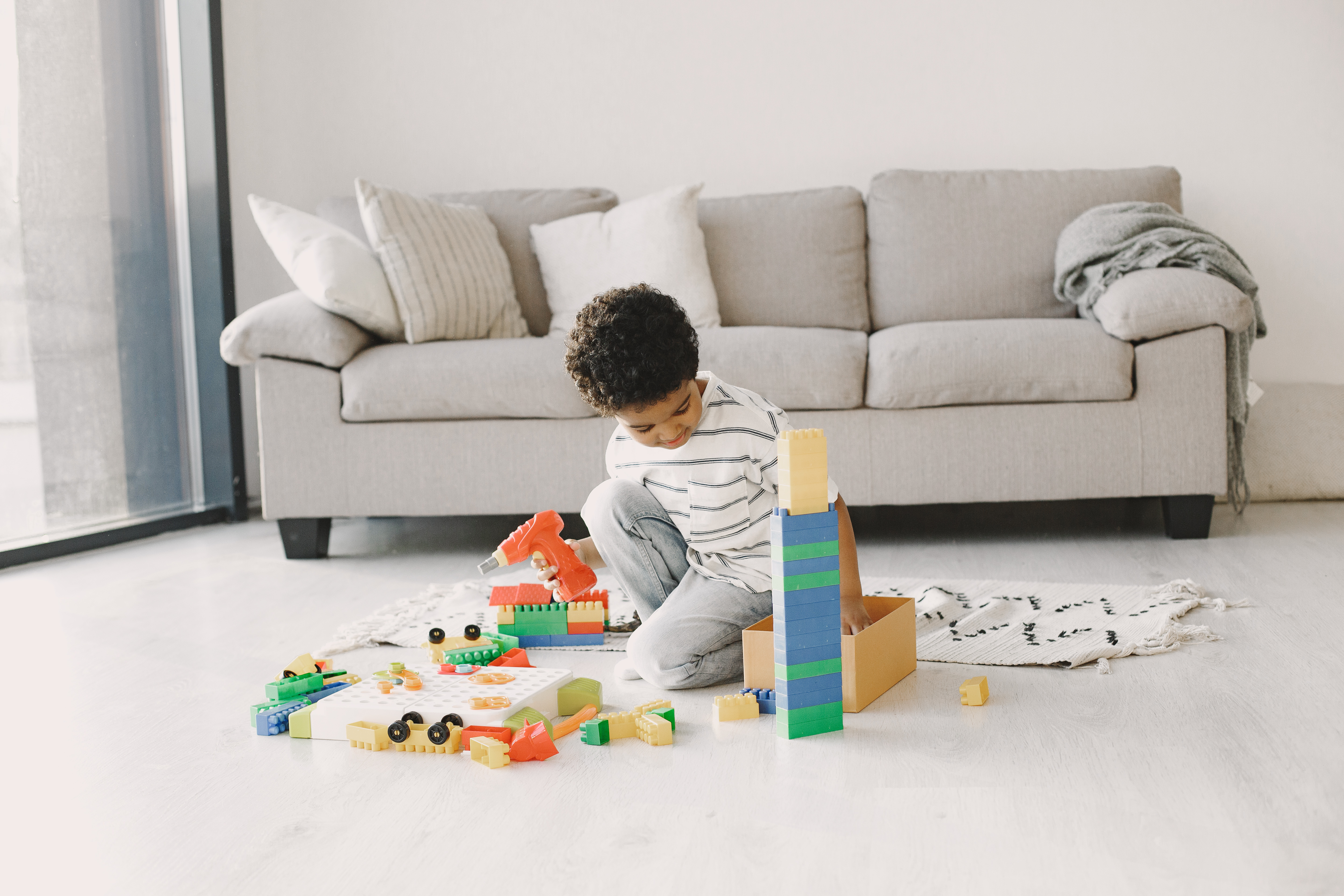
From peekaboo to pretend adventures, play may look like fun and games - but it is actually a powerful brain function. Every giggle, block tower, and imaginative story helps wire a child’s brain for thinking, learning, and connecting with others. In the early years, play isn’t just entertainment - it is the foundation for lifelong curiosity, confidence, and resilience.
What Play Does for the Brain
- Strengthens Brain Connections
Babies are born with billions of brain cells, called neurons. These neurons connect to one another to form pathways that carry signals based on experience. Every time a child plays (stacking blocks, reaching for a toy, or exploring their surroundings) brain connections are activated and strengthened. The more these connections are used, the stronger and more efficient the brain becomes.
- Builds Thinking and Problem-Solving Skills
Play challenges the brain to think, plan, and adapt. Pretend play (“Let’s pretend I’m a dragon!”), problem-solving (“How do we get the ball out of the box?”), and exploring new situations all help children practice executive function skills such as self-control, planning, and flexibility when things don’t go as expected. These executive function skills will prepare them for all future learning in school and beyond.
- Supports Emotional Health and Stress Relief
When children play in safe, joyful environments, their brains release “feel-good” chemicals that calm stress and promote a sense of safety. Play also allows children to express and work through big emotions like joy, frustration, excitement, or fear in a low-risk, healthy way.
- Develops Social and Language Skills
Playing with others teaches valuable social skills such as sharing, taking turns, and recognizing others’ feelings. Talking during play helps build vocabulary and understanding of key concepts like size (“big/small”), space (“under/next to”), and sequence (“first/next/last”).
- Enhances Physical and Motor Skills
Physical play – such as crawling, climbing, throwing, and catching - supports a child’s coordination, balance, and strength. Movement also benefits a child’s ability to pay attention and overall brain growth. Both fine motor skills (using hands and fingers) and gross motor skills (running and jumping) are essential for healthy development.
Why Early and Free Play Matter
- Early years are critical
During the first three to five years of life, a child’s brain develops rapidly. These early experiences lay the foundation for future learning and growth. Free play, play that is self-directed and open-ended, gives children opportunities to explore, make mistakes, and discover new ideas. - Autonomy fosters creativity
When children are free to invent their own games, take on pretend roles, or solve problems their own way, they practice creativity and flexible thinking. This helps build brains that not only follow rules but adapt to new and unexpected situations. - Safe risks build confidence and resilience
Activities like climbing, balancing, or jumping from low heights allow children to test their limits safely. These small challenges teach confidence, self-awareness, and resilience - skills that help them handle life’s bigger challenges later on.
What Parents Can Do: Simple Ways to Support Play
- Follow your child’s lead.
Join in their interests - if they want to build, help them build; if they want to pretend, play along or simply observe. - Use everyday moments.
A cardboard box can become a rocket ship. Leaves can turn into art materials. A walk outside offers shapes, colors, and textures to explore. - Talk about what they’re doing.
Describe actions (“You stacked the block on top of the other”) and ask open-ended questions (“What do you think will happen next?”). Use words about size, space, and order. - Embrace messy, noisy play.
Not every moment has to be tidy or quiet. Running, splashing, and experimenting—even when it’s messy - are vital parts of learning. - Protect time for unstructured play.
Balance structured activities and screen time with free play, where your child can explore, imagine, and lead.
The Bottom Line
Play isn’t just fun, it’s how children learn best. When kids run, build, imagine, and explore, they are developing the brain connections and life skills they will rely on for school, relationships, and future challenges.
By giving your child the time, space, and freedom to play, you’re not just creating moments of joy, you’re helping build a brain that’s ready for life.
Turning Everyday Moments into Brain-Building Opportunities
Simple, everyday moments: like stacking blocks, sharing a snack, or talking during a walk can make a big difference in a child’s brain development. The Vroom® program offers free tools and tips that turn these daily interactions into powerful opportunities for learning.
Vroom’s science-based “Brain Building Moments” are designed for busy parents and caregivers. Whether you’re at the grocery store, in the car, or getting ready for bed, Vroom activities show how to make those ordinary moments count for learning, connection, and growth.
You can explore free tips, videos, and the Vroom app at www.vroom.org.
American Academy of Pediatrics. (2018). The Power of Play: A Pediatric Role in Enhancing Development in Young Children. Pediatrics, 142(3).
American Speech-Language-Hearing Association. (2020). Learning Through Play.
Center on the Developing Child at Harvard University. (2021). Building the Brain’s “Air Traffic Control” System: How Early Experiences Shape Executive Function.
CHC Services. (2021). The Importance of Risky Play.
National Institute for Play. (2019). Why Play Matters.
Scientific American. (2022). The Serious Need for Play.
UNICEF. (2018). Learning Through Play: Strengthening Learning Through Play in Early Childhood Education Programmes.
Yogman, M., Garner, A., et al. (2018). The Power of Play: A Pediatric Role in Enhancing Development in Young Children. Pediatrics, 142(3).