Return to Articles
7.01.2025
Count the Kicks! 5 Things to Know about Counting Your Baby’s Movements
By: Kimberly Isburg Organization: Healthy Birth Day, Inc., creator of Count the Kicks
As your pregnancy progresses, you will begin to feel your baby move more and more. What starts out feeling like light flutters or “butterflies” in the second trimester will eventually become noticeable kicks, jabs, and pokes as you enter the third trimester of pregnancy.
Around the start of the third trimester (26-28 weeks), your baby will get into a more noticeable pattern of movements. That’s when it’s time to start counting your baby’s movements! This daily practice is an easy, free, and reliable way to check on your baby’s well-being.
The Count the Kicks program helps expectant parents like you learn how to monitor your baby’s movements in the third trimester. Count the Kicks can also help empower you to speak up if your baby’s movements ever change. It’s like having a data download for your pregnancy intuition! Here are five things every expectant parent should know about kick counting.
- How to Count the Kicks
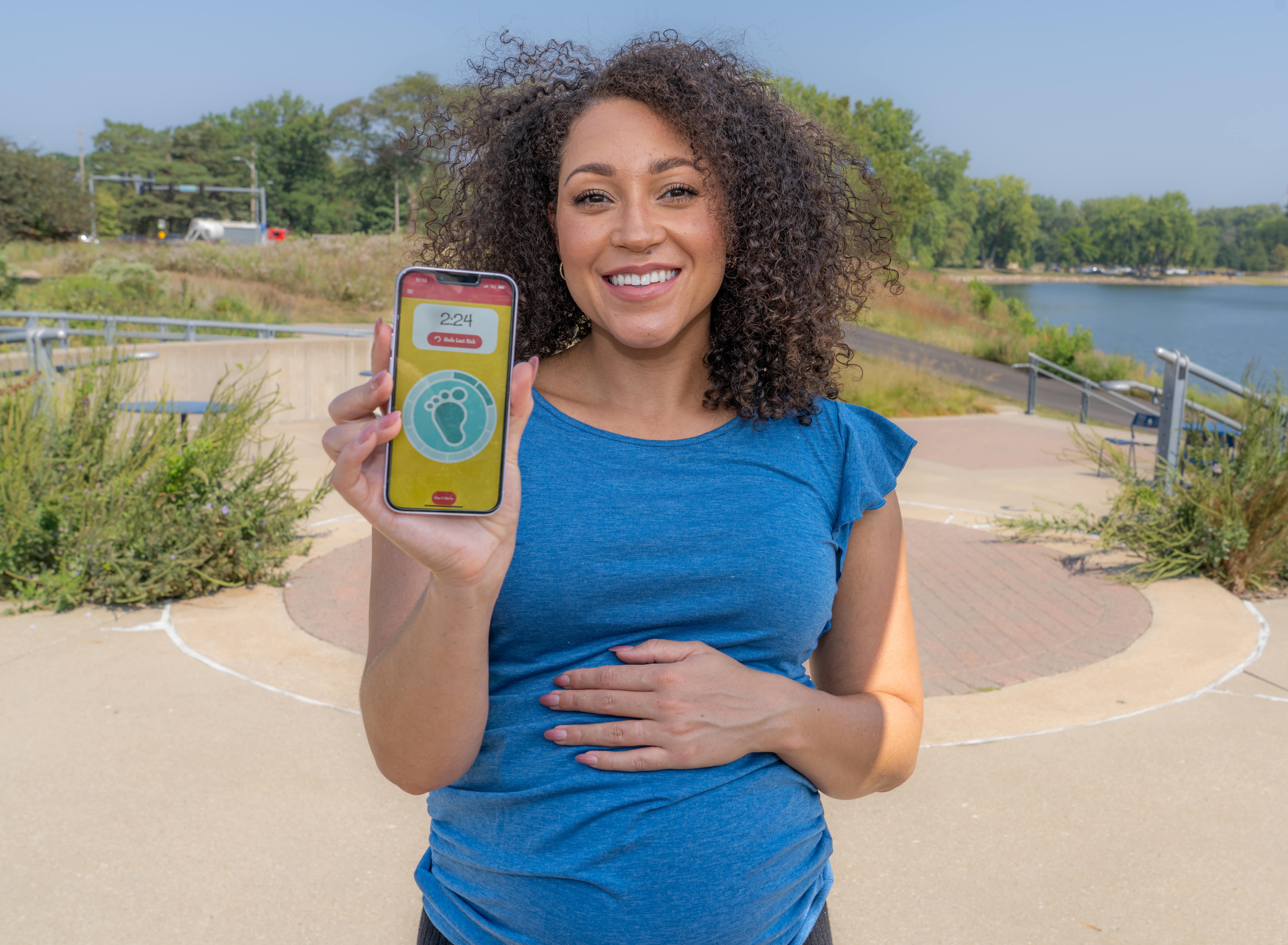
Starting at 28 weeks (or 26 weeks if you’re high-risk), download the free Count the Kicks app, use the web counter, or print out a paper chart. Sit with your feet up or lie on your side. Each day around the same time, count each of your baby’s movements as one kick and tap the footprint on the app until you reach 10 movements. The only movements that don’t count are hiccups, as those are involuntary.
Once your baby reaches 10 movements, you’ll be asked to rate the strength of your baby’s movements on a scale of 1 to 5, with 1 being “fluttery” and 5 being “fierce.” After a few days of tracking, you’ll begin to see an average length of time it takes your baby to get to 10 movements and become more familiar with the strength of your baby’s movements.
Watch this video to learn more about how to Count the Kicks.
- Kick counting is for every baby and every pregnancy
Every baby and every pregnancy are different. That’s why it is important to get to know the average amount of time it takes your baby to get to 10 movements. You can do this by counting kicks around the same time every day. Try to pick a time when your baby is normally active.
This is important because research shows a change in a baby’s movements could be the earliest, and sometimes only, sign that there might be an issue with your pregnancy. A change in your baby’s normal movement patterns could be a red flag, and an indication that you and your baby should be checked by a provider right away.
Think about what happens when you are not feeling well — you may want to sit around or lie in bed. Babies are just like us. If your baby is not feeling well, their movement changes. This is why it’s important to know what’s normal for your baby and to speak up if anything ever changes.
- Kick counting is a great way to bond with your baby (and reduce anxiety) Counting kicks is also a great way to bond with your baby! You can ask your partner or your other kids to help you count your baby’s movements. It’s a great way for the entire family to start bonding with the new baby and getting to know their personality.
Count the Kicks app users report that using the app regularly helped them feel less anxious and more bonded with their baby. The Count the Kicks app (available in over 20 languages) features easy-to-read graphs that display your baby’s normal movement history, a strength rating, and daily reminders so you never forget to count your baby’s kicks.
You can track movements for single babies and twins, and the app even allows you to download your sessions to text or email directly to your provider. You can even take notes (such as what you ate for breakfast that day or the questions you want to ask at your next appointment).
- Babies do not slow down or run out of room at the end of pregnancy Babies don’t slow down or run out of room at the end of pregnancy. The types of movements may change (more jabs, fewer rolls), but babies should move up to and even during labor. Even active babies can experience distress, sometimes quickly and without other warning signs.
If you are monitoring your baby’s movements at the same time each day, it should take about the same amount of time to feel 10 movements. By monitoring movements daily, you’ll have the peace of mind to know if your baby’s movement patterns have changed. Count the Kicks gives you real data to show your healthcare provider if you ever have a concern.
- It’s important to contact your provider if you notice a change
During your prenatal appointments, be sure to ask your provider how to contact them if you have concerns and when you should go directly to the hospital. If your provider doesn’t talk to you about your baby’s movement, it doesn’t mean it’s not important. It’s OK to bring up Count the Kicks with your provider and ask to show them your kick counting data.
If you notice a change in your baby’s movement, you should contact your provider right away or go directly to the hospital. It’s also important to pay attention to the strength of your baby's movements and notify your provider if your baby's movements become weaker.
Share Count the Kicks with every expectant parent you know
Count the Kicks is on a mission to make kick counting a common practice for ALL expectant parents in the third trimester of pregnancy. Visit the app store to download the FREE Count the Kicks app so you can start getting to know what’s normal for your baby! Or, share Count the Kicks with a friend or family member who is expecting.
Visit CountTheKicks.org to learn more and start counting.